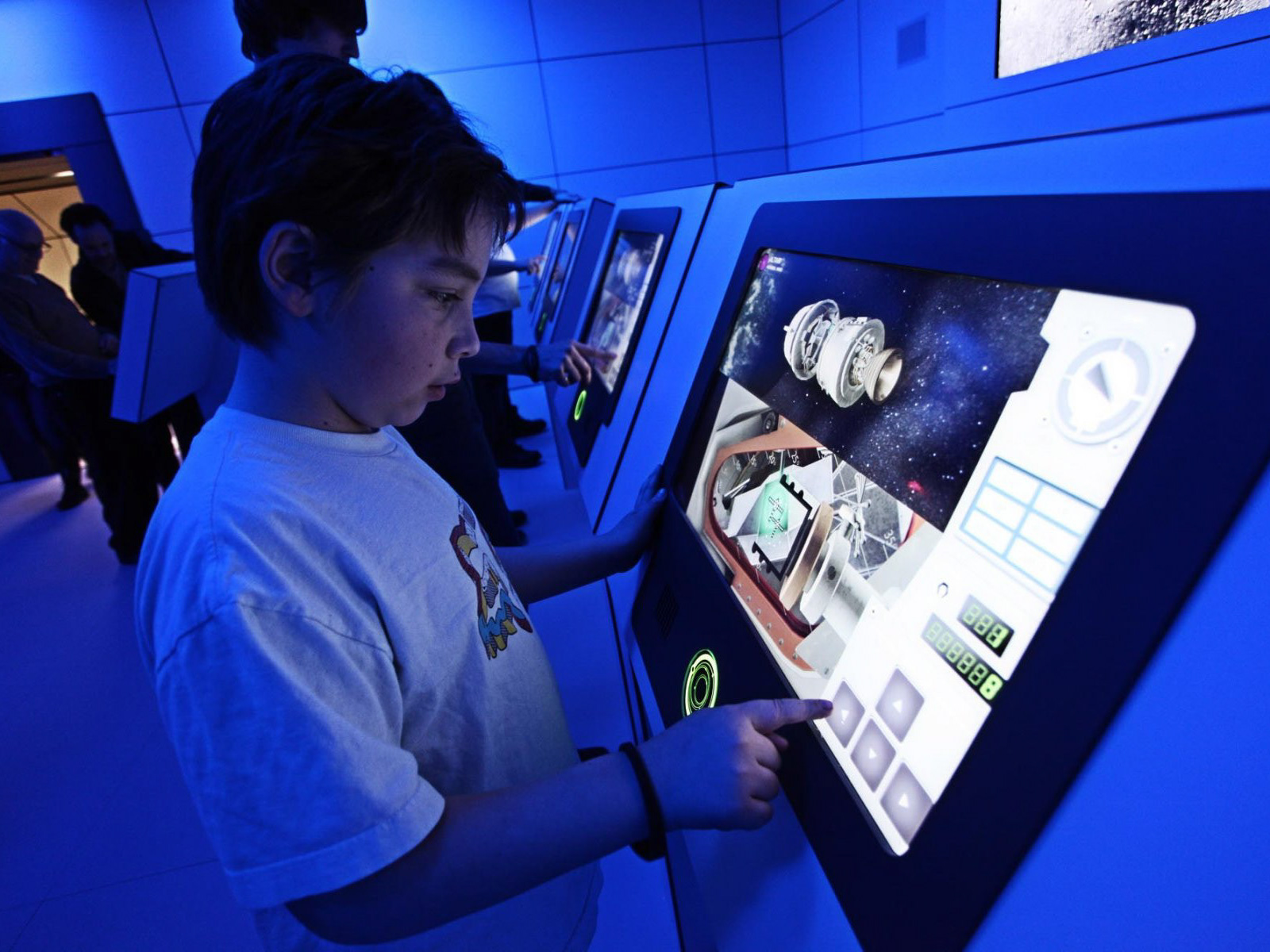
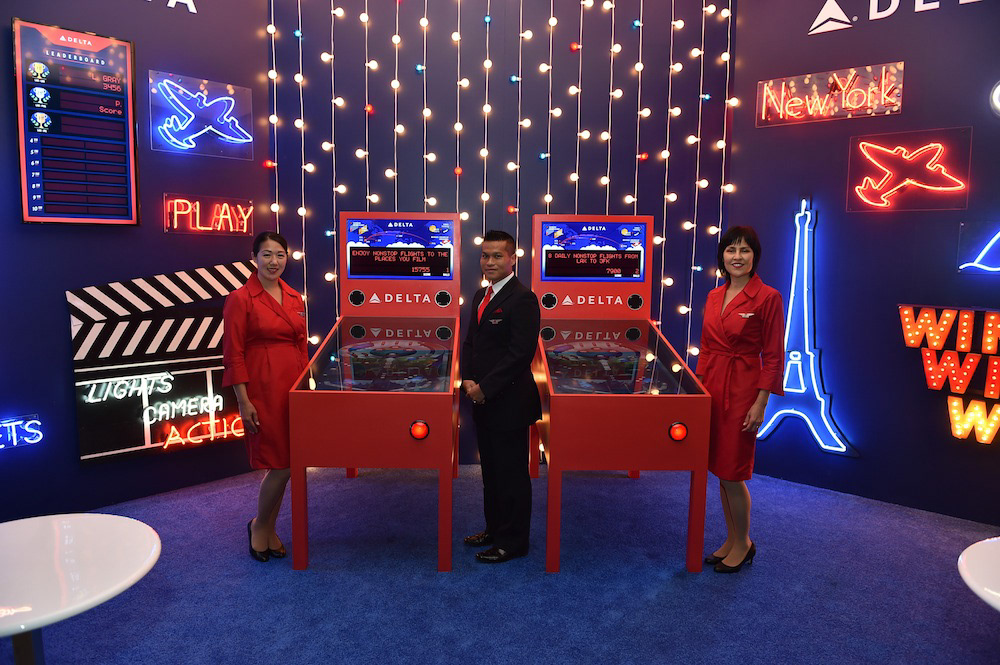
This iteration of the experience highlighted Delta’s key routes from LAX, in-flight features, and local area partners. Guests, including some major A-listers, could win prizes and flights throughout the evening, and a chance to win one of three grand prize flights to London, Shanghai, and New York.
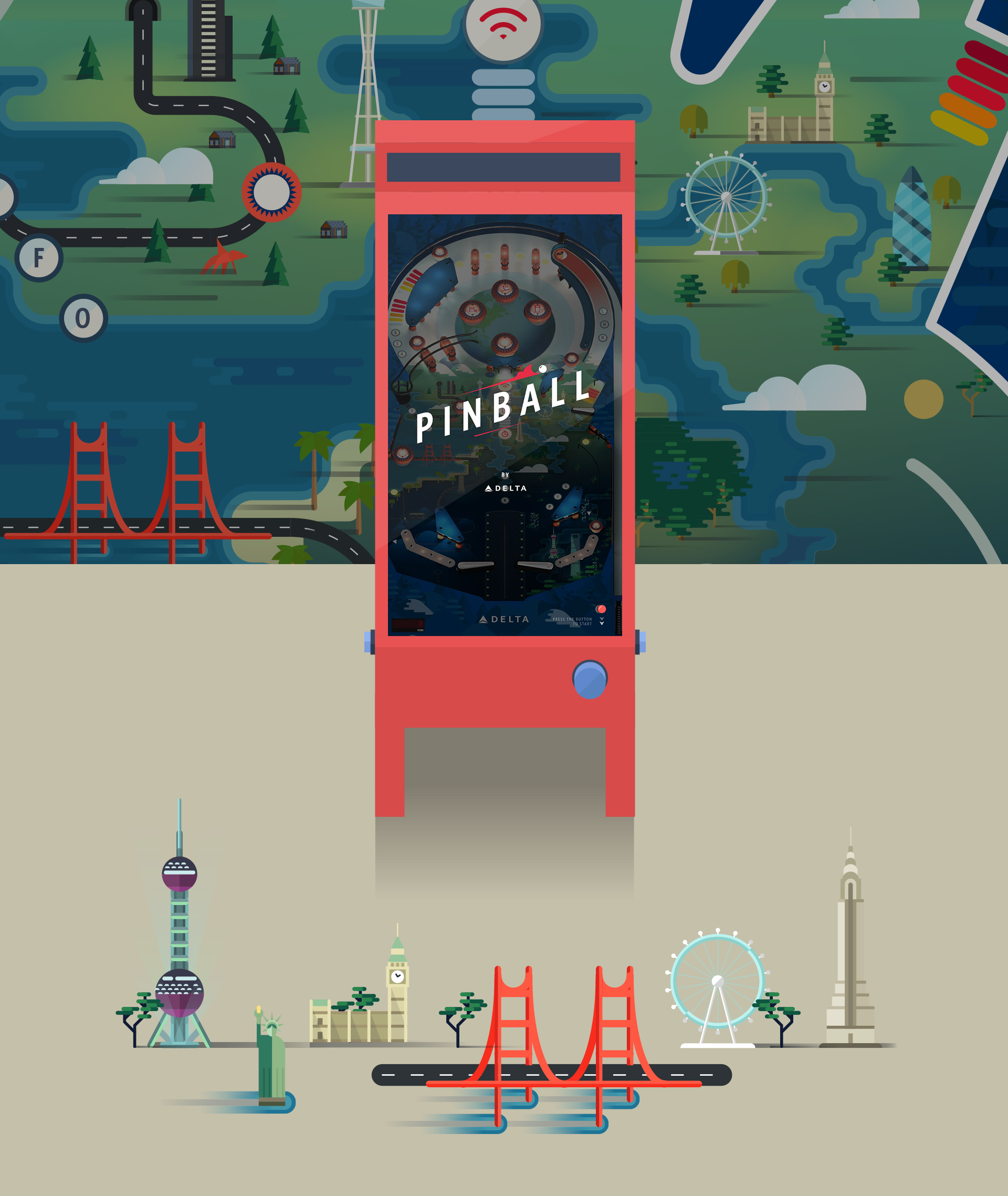
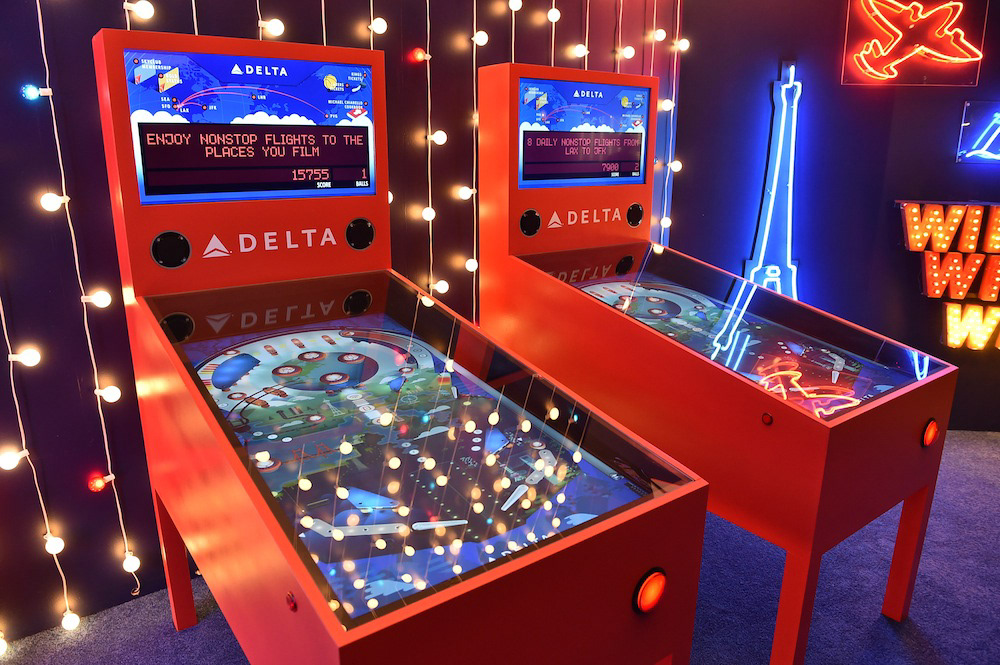
We created two giant pinball machines. Although users interacted with real physical buttons, the game was displayed on a 55 inch screen, embedded inside a custom shell.
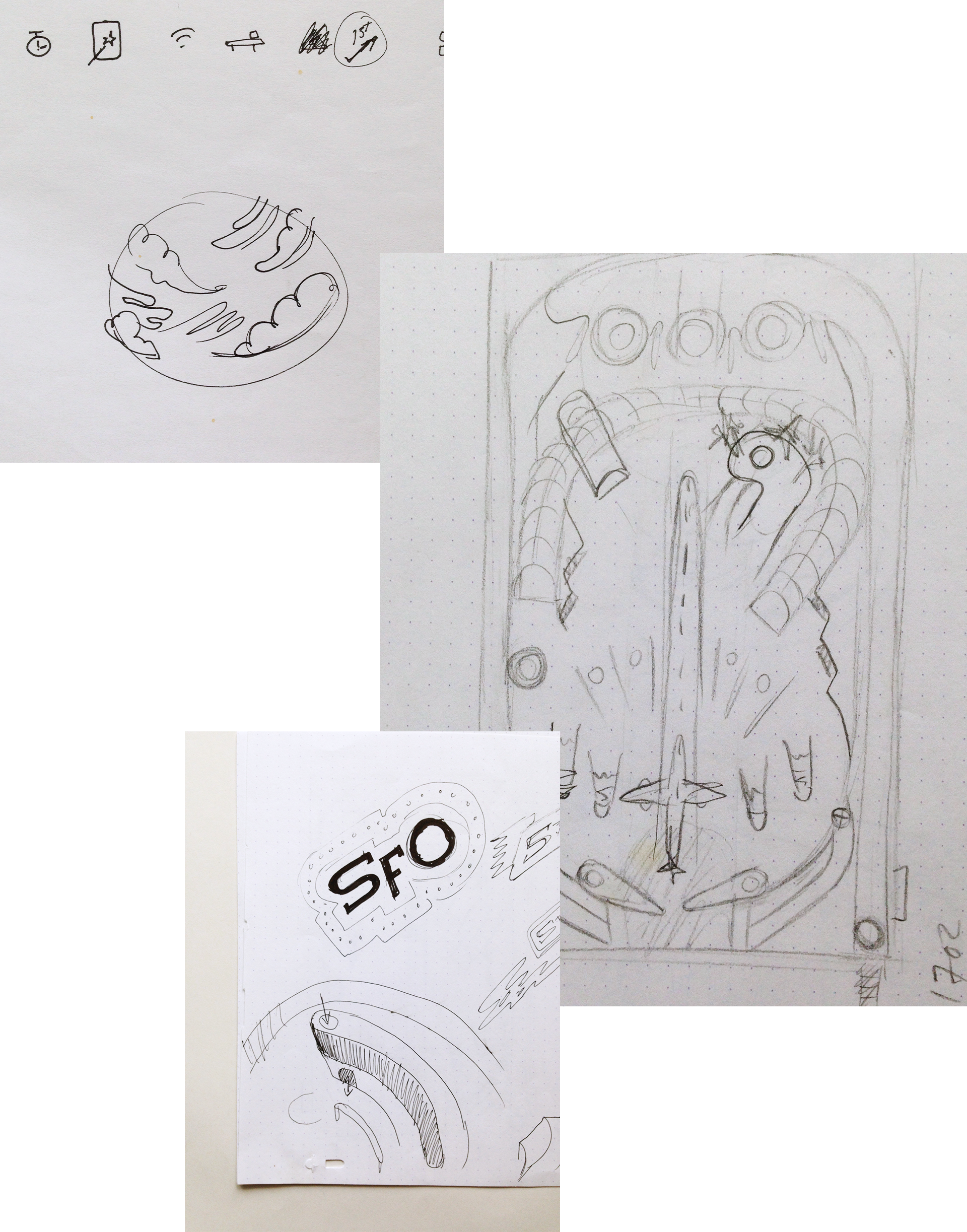
Preliminary Sketches
The project represented a unique collaborative challenge between Dpt. (interactive) and MKG (infrastructure). As such we needed clear design guidelines. For example, we needed to set the screen angle to avoid glare and have the 3D artist build a perspective of the game that was coherent with the visitor’s viewpoint. While we were not able to customize it for each visitor’s height, we found an optimal angle that offered a good play experience to the greatest number of event attendees.
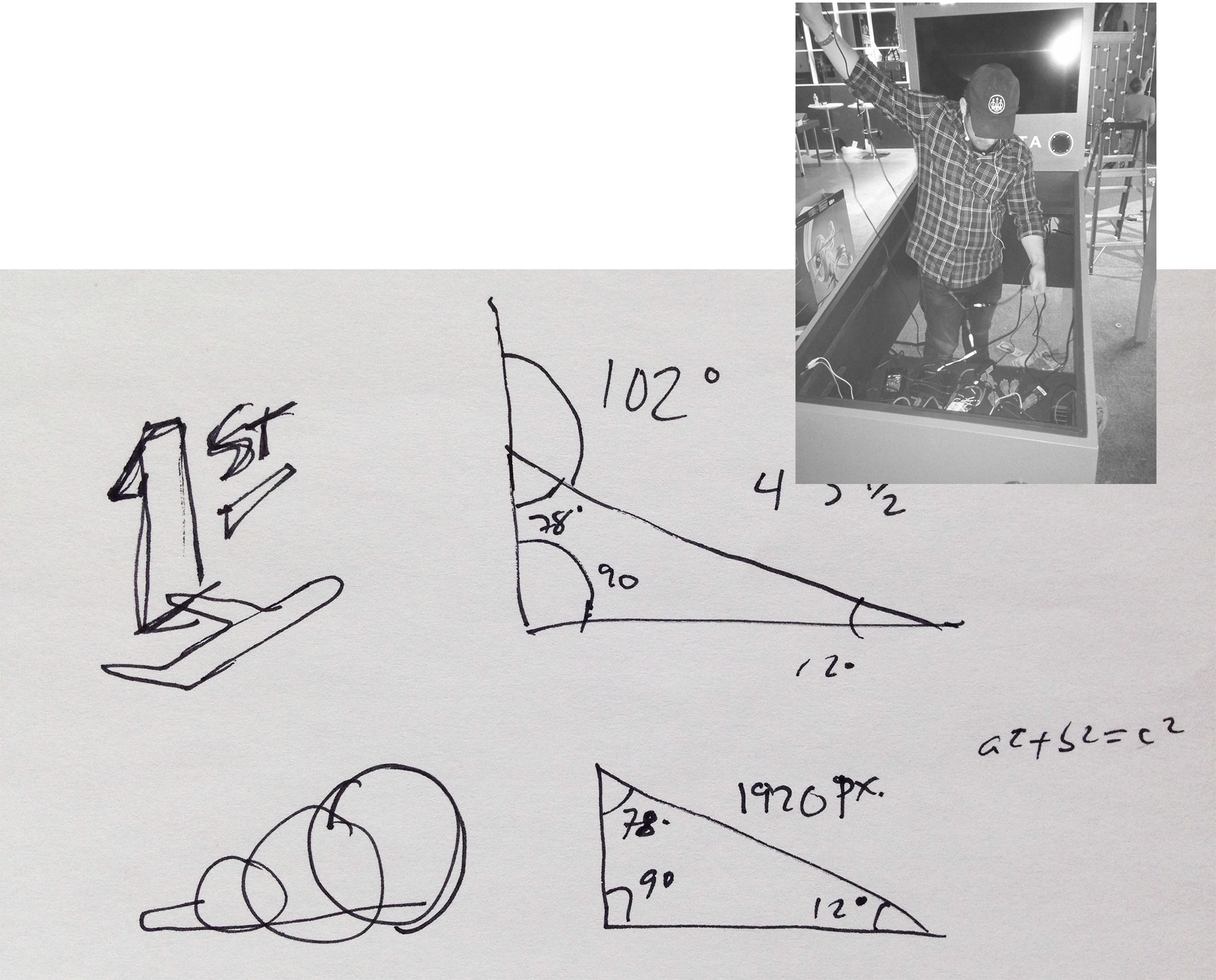
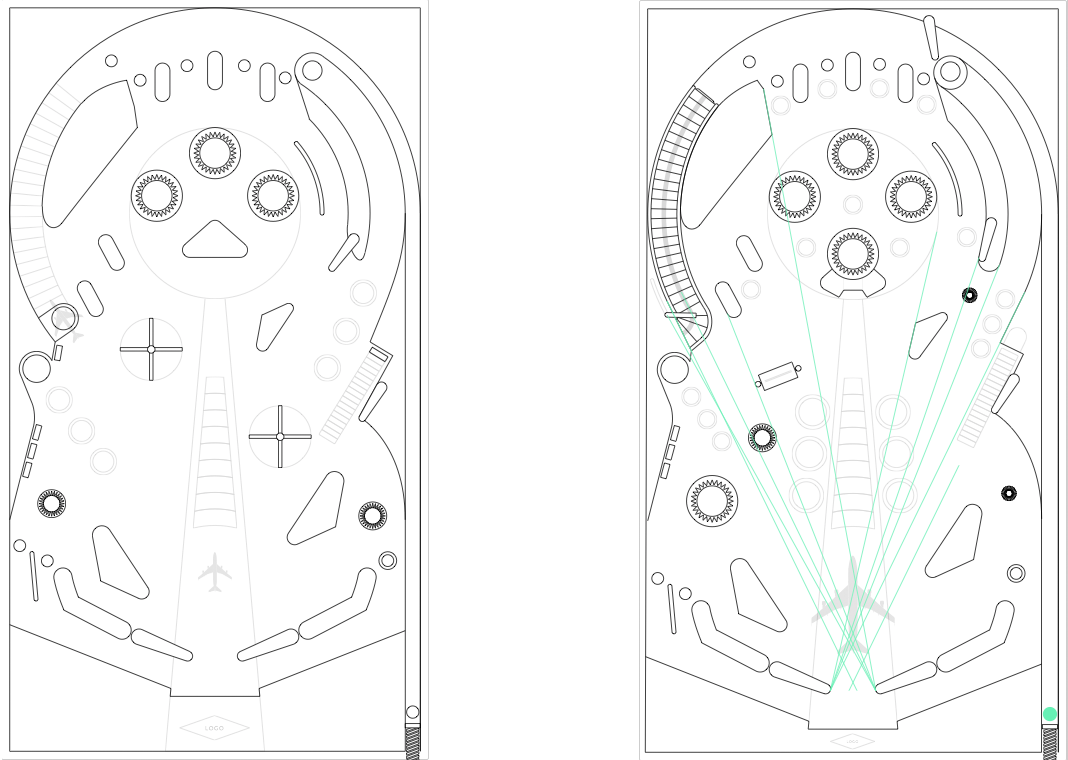
Preliminary Concepts
Other than the experience of having played many pinball machines in my life, I had little knowledge of how to build one, especially one that was on screen. Eager to learn about the subject, I took my search to the web and looked for DIY projects. Most them were physical installations, but seeing the building process helped me understand certain notions to keep in mind while sketching the first iterations of the game.
In the physical world, you have to deal with mechanical and electrical aspects all without forgetting gravity, of course. On screen, we have the privilege and inconvenience to adjust these to our liking. I use inconvenience because as one needs time to tune their guitar, the same time (even more) needs to be allotted to tune these factors for the perfect game experience.
Unfortunately, as we met certain design flaws in our process, we needed to recalibrate more than once.
The Screen
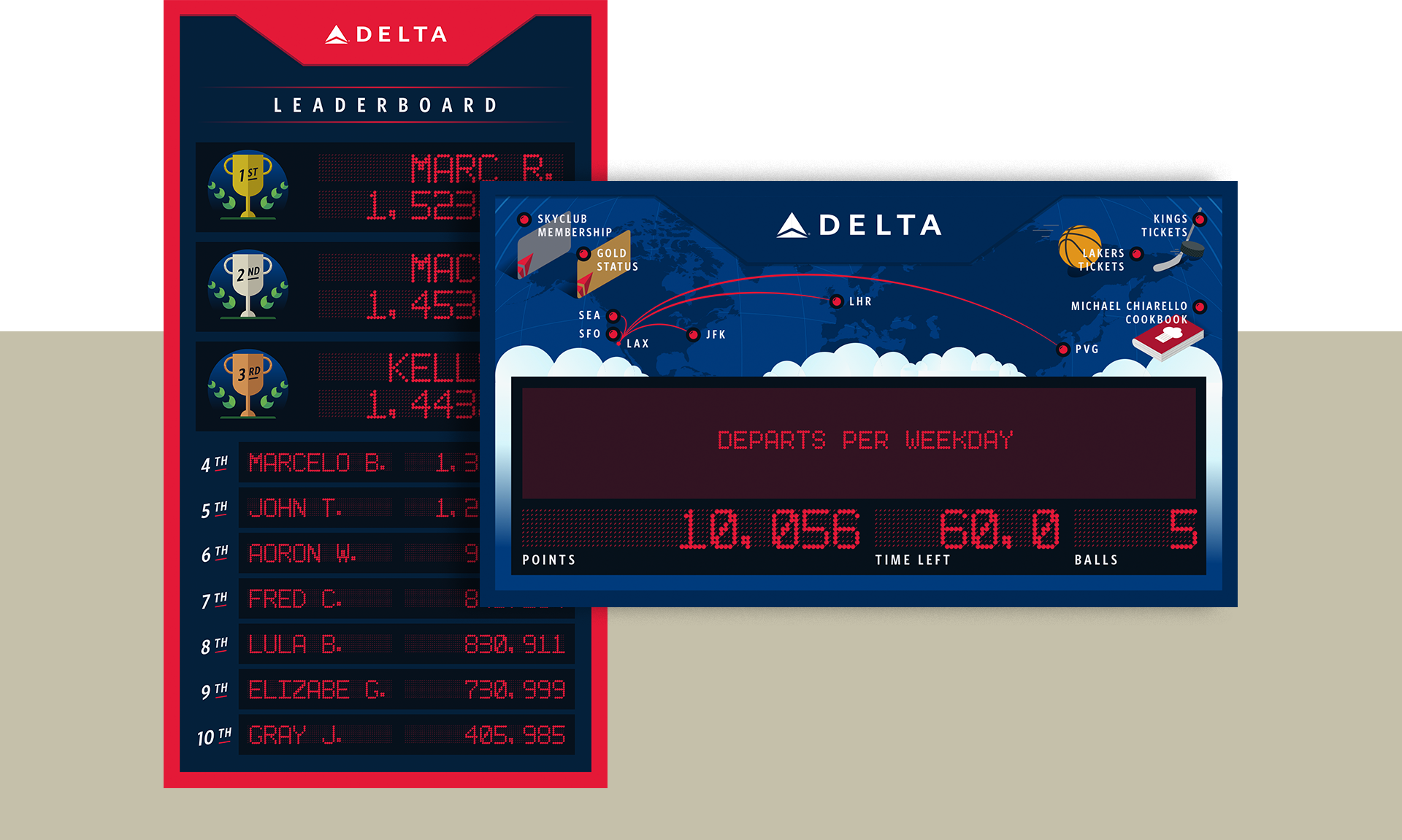
Using a screen for the gameplay allowed us to display multiple special effects, as well as promoting Delta promotional material: WIFI, first class beds, departures for Shanghai, London, Seattle, New York and San Francisco, all of which were illustrated in the game. The digital format also allowed players to win instant prizes.
Tangibility
To add to the realism of the experience, vibrating motors were integrated in the machine. These were activated each time the ball hit a fixed object in the game. In addition, familiar airline sounds were integrated (captain’s voice, safety belt *ping*, etc.) to strengthen the link between the game and Delta’s brand.
The Bumps
The screen experience was built in two layers, a flat background depicting visuals pertaining to Delta’s mission and the game infrastructure. Certain issues we encountered:
•Although I designed for a 1080 by 1920 resolution, the final background image needed to be much taller. As the artist applied it to the model, they needed to compress it vertically to give the illusion of perspective.
•I wanted to create multiple levels to the game. However, the rich visuals and amount of information to be included forced us to simplify the stage for the visitor to be able to keep track of the ball.
•Reflections of the backboard onto the game screen hindering the gameplay experience. This was reduced (not completely eliminated) by strategic positioning of the screen.
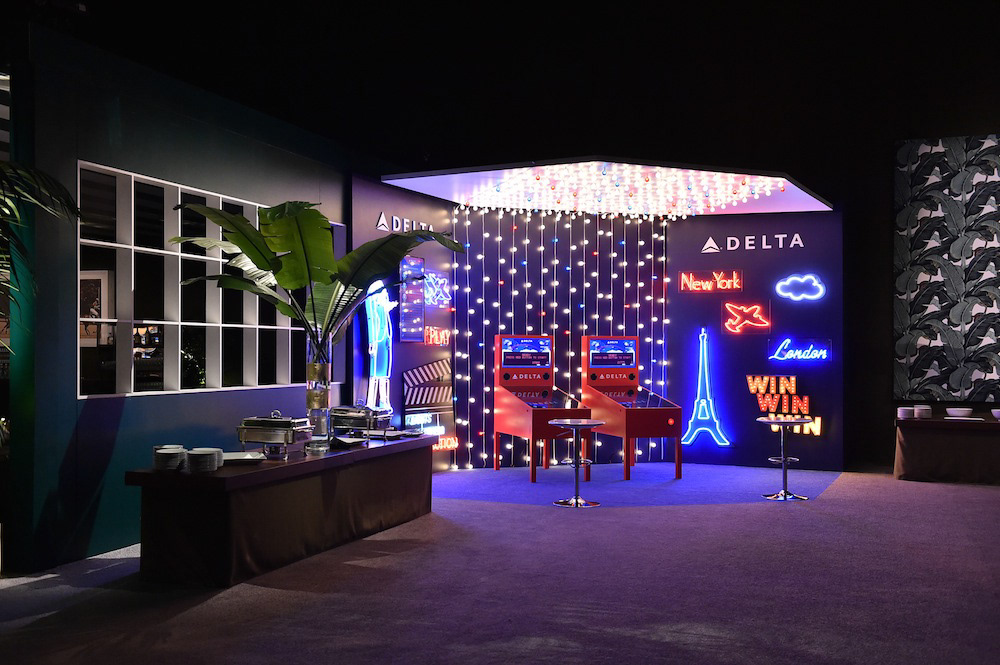
The partnership with the Motion Picture Television Fund, in addition with several others produced by MKG, helped Delta see positive results.

CLIENT
Delta Airlines
Delta Airlines
AGENCY
MKG
MKG
DESIGN & DEVELOPMENT BY
Dpt.
Dpt.
MUSIC & SOUND DESIGN BY
David Drury
David Drury